



Last updated on August 23, 2026
I have spent most of my working life around numbers. Before I ever held a real estate license or bought my first fencing franchise, I earned a finance degree, picked up an MBA in management and finance, and spent years in sales management watching exactly where every dollar went and what it brought back. So when a fellow owner asks me how much they should spend on marketing, I do not reach for a gut feeling or a round number that sounds nice. I treat a small business marketing budget like any other line on a profit and loss statement.
Here is the problem I see over and over. Most owners are either spending almost nothing and quietly wondering why the phone stays quiet, or they are throwing cash at whatever salesperson called them last week. A realistic small business marketing budget lives between those two mistakes. This article walks through how to set that number, how to divide it up, and how to prove it is working, using the same discipline I bring to my own businesses here in Central Texas.

Start with the benchmark most owners get wrong
Almost every conversation about a small business marketing budget starts in the wrong place. Owners ask what their competitor spends, or they pick a number that feels safe. Neither one tells you anything useful about your business. The better starting point is a percentage of revenue, because it scales with the size of what you are actually running.
The U.S. Small Business Administration points owners toward industry benchmarks rather than one magic number, and the widely cited version of its guidance is that companies under five million dollars in revenue put roughly seven to eight percent of that revenue back into marketing, assuming healthy margins in the ten to twelve percent range. Broader 2026 benchmark data lands close to that, with the average marketing budget sitting near nine to ten percent of revenue across industries.
Put a real number on it. If you are doing five hundred thousand dollars a year, a defensible small business marketing budget is somewhere around thirty five to fifty thousand dollars annually. That figure stops a lot of owners cold, and we will talk about why in a minute. The point is that the benchmark gives you a range to react to instead of a blank page to stare at.
Stage matters too. A brand new business in its first year or two often needs twelve to twenty percent of revenue just to get its name in front of people, because it has no reputation carrying the load yet. An established shop with five or more years of word of mouth can usually operate on the leaner six to twelve percent side.
Why percent of revenue is a starting point, not the answer
I like the percentage rule because it is simple, but I would never let it be the final word. A percentage of revenue tells you what is typical for a small business marketing budget. It says nothing about what your specific business can afford or what it needs to hit its goals. Two shops with identical revenue can have wildly different room in the budget.
This is where margins do the heavy lifting. The SBA benchmark assumes you are keeping ten to twelve cents of every dollar as profit. If your margins are thinner than that, and plenty of local service businesses run tight, then peeling off eight percent for marketing can put real pressure on the rest of your operation. A smart small business marketing budget respects your margin, not just your top line. I would rather see an owner spend five percent they can sustain all year than eight percent that forces a panic cut in the fourth quarter.
The other trap is treating the number as fixed. Marketing is an investment, not a utility bill. If a channel is returning three or four dollars for every dollar you feed it, the question is not whether you can afford to spend more. The question is why you would ever stop.
Build your small business marketing budget from the goal backward
Percentages are a sanity check. Real budgeting works backward from a goal, and this is the part my finance background will not let me skip. Instead of asking what everyone else spends, ask what you actually need to happen this year, then reverse engineer the cost of getting there.
Start with a revenue target. Say you want twenty new customers a month. If you know that on average one in five solid leads becomes a customer, you need a hundred leads a month. If your history says a good lead currently costs you forty dollars to generate, that is four thousand dollars a month in acquisition spend before you add anything else. Now you have a small business marketing budget grounded in math instead of a mood.
Most owners have never run this calculation, which is understandable. You are busy running the business. But even a rough version changes the entire conversation. It turns marketing from a vague expense you resent into a predictable engine you can dial up or down. When we build a plan for a client, this backward math is the first thing we do, because it tells us whether their goal and their budget are even in the same universe.
What small businesses actually spend versus the benchmark
Here is the honest gap. The benchmarks say seven to ten percent, but real spending is often a fraction of that. National data pegs the average business at spending only about one percent of revenue on advertising specifically. Restaurants often sit near two percent, retailers around four. In other words, a lot of owners are spending far below what the benchmark recommends and then feeling frustrated that growth is slow.
I bring this up because a realistic small business marketing budget has to account for what the market around you is doing. And the market here is not sleepy. The Killeen, Temple, and Fort Cavazos region is home to more than four hundred seventy five thousand people and was ranked among the fastest growing metro areas in the country heading into 2026. New rooftops and new businesses keep arriving along the Interstate 35 corridor.
That growth cuts both ways. There is more demand than there was five years ago, but there is also more competition fighting for attention. Underspending in a growing market is how you get quietly passed by newer competitors who decided to invest. A serious small business marketing budget is partly a defensive move, not just an offensive one.
Split your small business marketing budget by channel
Once you have a number, the next question is where it goes. This is where I see the most waste, because owners tend to spend based on what is familiar rather than what performs. A modern small business marketing budget is mostly digital, and the data backs that up. Online channels now command roughly sixty percent of total marketing spend for a reason. That is where your customers are looking before they ever call.
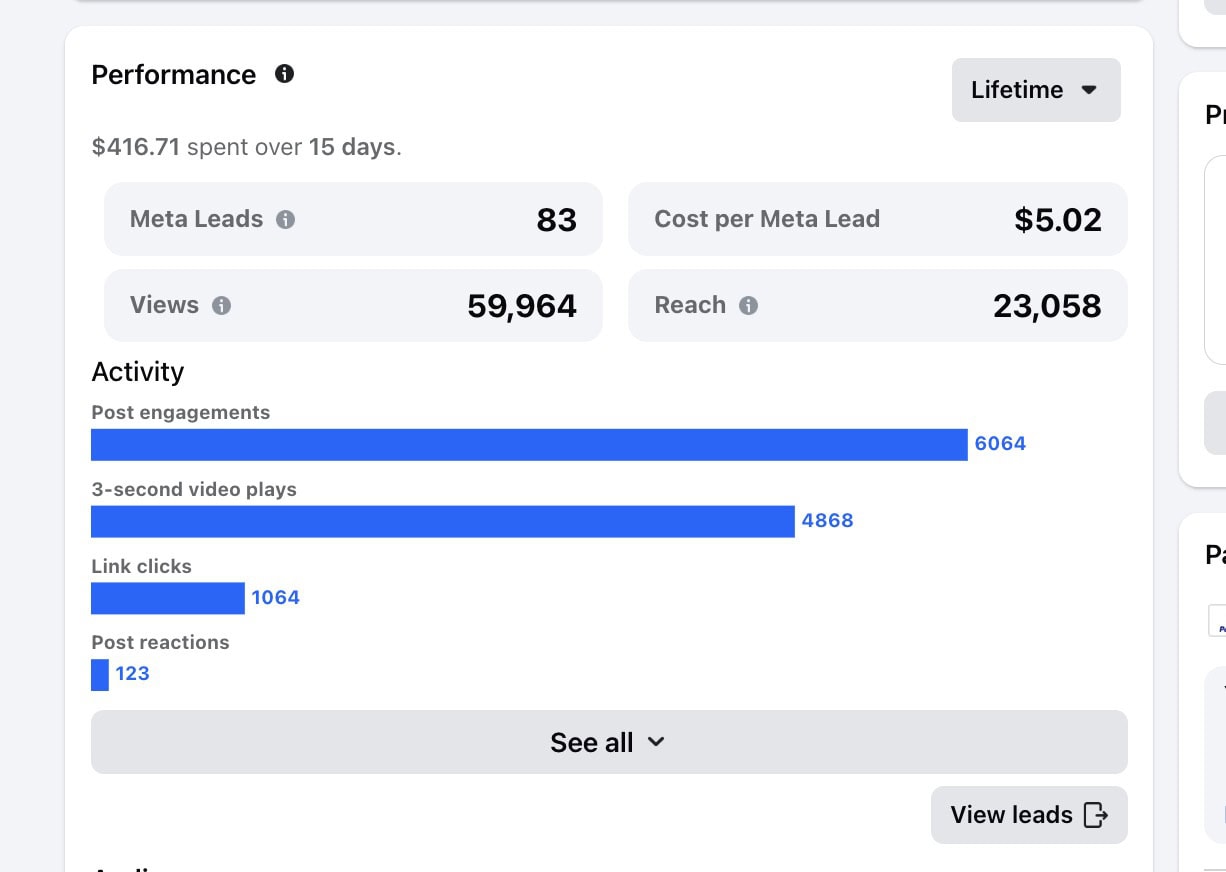
A reasonable starting split for a local business looks something like this. Paid search and paid social, the channels that generate leads fastest, take the largest slice, often twenty five to thirty percent. Search engine optimization and content, the slower compounding play, earn another twenty to twenty five percent. Social media presence and creative sit around fifteen to twenty percent. Email, which is cheap and quietly one of the best returns you will find, takes five to ten percent. If you run paid lead campaigns, our breakdown of how much a Temple business should spend on Meta lead ads gets specific about the numbers.
Local search deserves special attention here. For a small business, showing up in the map pack and ranking for local terms is often the single highest return line in the entire budget. If you serve a specific area like Temple, Belton, or Killeen, your Google Business Profile and local SEO are not optional extras. They are the foundation everything else builds on. We wrote a full guide to local SEO for Central Texas contractors that walks through exactly how that works.
The local factors that change your number
National benchmarks are a fine starting point, but they do not know anything about your specific corner of the map. Several local realities should nudge your small business marketing budget up or down, and ignoring them is how owners end up with a plan that looks good on paper and fails in practice.
Population turnover is the big one here in Central Texas. With Fort Cavazos supporting more than thirty six thousand active duty personnel, this region sees constant movement of families in and out. That is a steady stream of brand new customers who have never heard of you, which raises the value of always on awareness spending. A market with high turnover rewards consistent visibility more than a stable small town would.
Seasonality matters too. Home services spike in spring and summer, retail leans on the fourth quarter, and a smart owner front loads spend into the windows when buyers are actually ready. Your competition is a factor as well. If three well funded competitors are bidding on the same Google keywords you want, your cost per lead climbs, and your small business marketing budget has to absorb that or you get outbid. We covered why Google Ads cost per lead keeps climbing in a separate piece, because it catches a lot of owners by surprise.
Do not forget the hidden line items
When owners hand me a marketing number, it is usually just the ad spend. That is a mistake, and it is why so many budgets feel like they underdeliver. A complete small business marketing budget includes the infrastructure that makes the ads work, and that infrastructure is not free.
Your website is the first one. You can buy all the clicks you want, but if they land on a slow, dated, or confusing site, you are pouring money into a leaky bucket. A share of every budget should protect and improve that asset. We covered the top website mistakes that quietly kill conversions if you want to pressure test yours. Tools are next. Customer relationship management software, email platforms, scheduling and review tools, call tracking, and analytics all cost something, and they usually run ten to fifteen percent of a real budget once you add them up.
Then there is the creative and the labor. Someone has to write the emails, shoot the photos, build the landing pages, and answer the leads quickly enough to convert them. Whether that is a staff member, a freelancer, or an agency like ours, it is a real cost that belongs inside the small business marketing budget from day one, not a surprise you discover in month three.
How to know your small business marketing budget is working
This is the part that separates a budget from a bonfire. Spending without measurement is just hoping, and hope is not a strategy I would ever put on a spreadsheet. The whole reason to set a disciplined small business marketing budget is so you can hold it accountable to a return, the same way you would any other investment.

Track three numbers at a minimum. Cost per lead tells you what you are paying to get a potential customer to raise their hand. Cost per acquisition tells you what you pay to actually close one, which is the number that matters most. And return on ad spend, or how many dollars come back for each dollar out, tells you whether the whole machine is profitable. If you cannot answer those three questions, you are not budgeting, you are gambling.
The good news is that digital channels make this measurable in a way that billboards and radio never could. You can see which keyword drove the call, which email drove the sale, which campaign is quietly losing money. A small business marketing budget you actually track becomes self correcting. You move dollars away from what is not working and into what is, month after month, until the whole thing compounds. That monthly review does not need to be fancy. A single spreadsheet with spend, leads, and closed deals per channel will tell you almost everything you need to make the next call.
Common ways owners waste a marketing budget
I have watched a lot of money disappear over the years, and the waste almost always follows the same patterns. The first is spreading too thin. An owner reads that they should be on every platform, so they open accounts everywhere and do a mediocre job on all of them. A focused small business marketing budget beats a scattered one every time. Two channels done well will outperform six done halfway.
The second pattern is chasing the shiny object. Every few months a new platform or tactic gets hyped, and owners yank money out of things that are quietly working to fund an experiment. Experiments are fine, but fund them from a small test line, not by starving your proven channels. Discipline is what makes a small business marketing budget compound instead of reset every quarter.
The third is the one that stings most. Owners spend real money driving leads and then have no system to answer them fast. Studies on lead response are brutal here. A lead you call back in five minutes is worth many times more than one you call back the next day. If your small business marketing budget generates calls that go to voicemail and die, the problem is not the budget. It is the follow up. Fix the leaky part of the bucket before you pour in more water.
When to grow your marketing budget
A small business marketing budget is not a number you set once in January and forget. The whole point of tracking your return is that it tells you when to press the gas. If a channel is reliably returning three or four dollars for every dollar you put in, that is not the time to hold steady. That is a signal to feed it more, because you have found a machine that turns money into more money.
The clearest sign it is time to grow your small business marketing budget is a healthy and stable cost per acquisition paired with demand you are not fully capturing. If you can close more business than your current spend is generating, and the unit economics still work, growth is the obvious move. I would rather scale a proven winner than gamble on a brand new tactic.
There are limits, of course. Watch for the point where each additional dollar starts returning less than the one before it. Every channel eventually saturates. When you see cost per lead creeping up as you spend more, you have found the ceiling for now, and the smart play is to hold there and open a new channel rather than force it. A mature small business marketing budget grows in steps, tests the return at each level, and never outruns the math that justified it.
A simple framework to set your number this week
You do not need a finance degree to get started, even though I happen to have one. You need an afternoon and a willingness to be honest about your numbers. Here is the checklist I would hand any owner who wants a realistic small business marketing budget without overthinking it.
- Pull your last twelve months of revenue and your rough profit margin. This is the foundation, so do not skip it.
- Multiply revenue by seven to ten percent for a benchmark, then sanity check it against your margin. If it strains the business, start lower and scale up as returns prove out.
- Write down one specific growth goal for the year, in customers or dollars, not vibes.
- Estimate your current cost per lead and your close rate, then work backward to what hitting that goal actually costs.
- Split the number across channels, weighting local search and paid lead generation for a local business.
- Add the hidden line items: website, tools, creative, and the labor to run it all.
- Pick your three tracking metrics and commit to reviewing them monthly.
Do that, and you will have a small business marketing budget built on math instead of guesswork. You can find our full service areas across Central Texas if you want to see where we work.
Quick answers on your small business marketing budget
What percentage of revenue should a small business marketing budget be? For most established businesses, seven to ten percent of revenue is a solid benchmark, with newer businesses often needing twelve to twenty percent to build awareness. Always sanity check the number against your profit margin.
How much should a small business spend on marketing per month? Take your annual small business marketing budget and divide by twelve, then front load a little into your busy season. A business doing five hundred thousand a year often lands between three and four thousand dollars a month.
Is digital marketing worth it for a small local business? Yes, and it is usually the highest return part of a small business marketing budget. Local search, Google Business Profile, and paid lead generation let a small business punch well above its weight against larger competitors.
How do I know if my marketing is working? Track cost per lead, cost per acquisition, and return on ad spend every month. If those numbers are healthy and improving, your small business marketing budget is doing its job. If you cannot measure them, that is the first thing to fix.
Should I hire an agency or do it myself? Either can work. The real question is whether the time you spend on marketing is worth more than the time you spend running your business. Many owners find that folding an agency fee into the small business marketing budget frees them to do what they do best.
Shawn Prettyman, MBA is a Central Texas entrepreneur, REALTOR with Magnolia Realty Temple and Belton, and the local franchise owner of Stand Strong Fencing. With a finance degree and an MBA in management and finance, he looks at every marketing dollar the same way he looks at any other investment: what did it cost, and what did it bring back.